|
||||

A simple guide to household heating systems |
|
When you consider household heating systems you should differentiate between your household heating requirements and your domestic hot water (DHW) requirement. Whilst heating the property is often left to the trusty old radiator (or more recently to Under Floor Heating) there are different ways to provide domestic hot water. It is possible to mix and match as it were the different systems to some degree. For example, you could have a gravity hot water system which is open vented coupled with a sealed radiator system, or a fully open vented system where hot water and radiator circuit are both vented (albeit separately). This guide is intended to take a little of the mystery out of heating systems and help you to understand your options. |
There main types of household heating and water systems include:
As a brief guide only, these systems are described in the following sections. |
Fully vented / Gravity Fed System |
|||
|
In a fully vented system (with gravity cold water feed to hot water cylinder and radiator circuit venting into a small cistern - often sited in the loft) water is typically heated by a boiler then circulated via (zone valves) two 2 port valve or a single 3 port valve (depending on whether you have a 'Y' or 'S' plan configuration) to either:
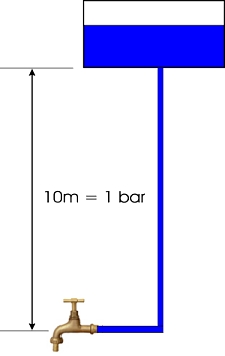
Control of what your boiler heats is by virtue of a programmer and the zone valves. The term 'fully vented' comes from the fact that no part of this type of system is pressurised. There are usually two water tanks situated in the loft (one smaller than the other). The larger cold water cistern (or tank) supplies water to the hot water cylinder and does so purely by the force of gravity. The domestic hot water system (DHW) and cylinder vent back into this cistern. The smaller 'feed and expansion' tank (F&E) that vents the radiator circuit (and also keeps it topped up) also operates courtesy of gravity. Both cisterns will usually be fitted with a float valve so that a level may be maintained within the cistern and fed from a mains supply. A gravity system is inherently safe. Because it should be impossible to have a dangerous pressure build-up in any part of the system there is no risk of something bursting under pressure - or at worst ... an explosion! That's the good news. There are however draw backs (trade-offs) as there are with each and any system. The main draw back with a fully vented gravity system is the pressure you can expect from your domestic hot water. As mentioned, the cold water feed to your hot water cylinder is under the force of gravity. It is therefore going to be relatively low pressure.
Providing the cold water cistern is higher than the outlet point you have what is known as a 'positive head'. If you attempt to create an outlet higher than the cistern you will have a 'negative head' scenario. In this situation you will not get water to flow from the outlet under normal gravity conditions - for the simple reason that water will not voluntarily travel up hill. Gravity systems (open vented systems) as mentioned are simple and safe. They may be low pressure, but they do have the advantage of being to ONLY type of system to which you may add a booster pump. You can even get 'negative head pumps' to cope with the problems of outlets above cistern level. By comparison, Water Bye Laws prohibit the use of pumps on mains pressure systems to increase flow or pressure. Combi systems are ains fed and will already be working flat out so attempting to increase flow here is folly. So, if you have a low pressure gravity system and are fed up with the poor performance of your shower you can add a booster pump - that's the good news. To summarise: Positives: Inherently safe. Suitable for addition of booster and power shower pump to provide exceptional flow rates. Negatives: Require loft tanks and a hot water cylinder, so provision must be made for the space these will require. An unpumped system will offer low pressure at taps and outlets. Economy: Water must be heated and stored whether or not it's used. Important to make sure your system and storage is insulated well to minimise standing heat losses. No less economical to produce hot water than any other system. Typical System Requirements: Boiler, Hot Water Cylinder, Loft Tank/s, Rads. |
Combination Boilers |
|
A Combination Boiler typically requires no storage tanks. It provides hot water to your taps 'on demand' by heating cold water supplied to it directly from the incoming cold water main as required. It also provides a circuit of hot water to heat the household radiator system which can be programmed. Combi's only heat what you require. Offering the advantage of space saving, Combi Boilers are popular. They can however have the disadvantage of lower hot water flow rates - more often noticed when filling a bath or when simultaneous supply is called for at more than one outlet. Not particularly suitable for properties with more than one bathroom or shower. Boilers with bigger and better flow rates are being achieved but performance is still a little lacking. Positives: Compact unit requiring no external tanks - good for space saving. Perform well with showers. Endless amounts of hot water on demand albeit slowly. Negatives: Typically lower flow rates than other systems. Baths can take a long time to fill. Will not support simultaneous demand from several outlets. You cannot install a shower pump to increase performance if you discover your are less than happy. Economy: You only heat what you need. No storage equates to no standing losses. Typical System Requirements: Combination Boiler Only - (No external tanks) - Rads. |
Mains or High Pressure Systems |
|
|
Mains pressure systems are regarded by some as the best. But beware - there are disadvantages here too. The term typically refers to the pressure you achieve at your hot taps. Mains pressure systems provide mains pressure hot water. This is only an advantage if you enjoy good mains pressure within your property. If your supply pressure and flow rate are poor there is little point. There are different system types that can offer this facility and you are recommended to examine them carefully before you decide which is best for you. On the down side, hot water at high pressure is extremely dangerous. Unvented mains pressure hot water systems require notification to building control, certified installation and commissioning, and annual servicing to ensure they continue to function safely. A system storing hot water under pressure that is incorrectly installed or poorly serviced can be extremely dangerous. There are documented cases where unvented cylinders have malfunctioned and exploded. To illustrate the point you might like to visit You Tube and see a controlled experiment set up by The Myth Busters - https://www.youtube.com/watch?v=rGWmONHipVo
....and this TV news article - just listen to the damage this event caused not only to the domestic dwelling in which this cylinder was installed but also surrounding properties. Reference is made to the landlord 'tinkering' with the heater shortly before it exploded!! BE WARNED !!! http://www.youtube.com/watch?v=iQK6McNdyXE&feature=related
CONCLUSIONS Positives: Hot water at mains pressure throughout your property. Potentially high flow rates. No feed or expansion tanks in loft. Negatives: Slightly more costly to install. Some HP Systems require certification and annual maintenance for reasons of safety. Pressure and flow only as good as your incoming main. You may not install a shower pump on a mains-fed system. Economy: Choosing a system type requiring annual maintenance will lock you into long term cost. Water must be heated and stored regardless of use. Typical System Requirements: Boiler, Pressure Vessel or Thermal Store, Rads. ALTERNATIVE PRODUCTS:Mains pressure hot water can be produced using a device known as a Thermal Store. Thermal stores exploit the inherently safe nature of a vented cylinder whilst producing mains pressure hot water. What is more, they don't need a specialist installer, certification or annual servicing. To complete the picture there are also models that will accept heat from multiple heat sources, such as solar, wood burner, AGA, ground source heat pump, air recovery and more. They can be an essential part of any renewable energies project. To learn more visit the section of our website dedicated to Thermal Stores and for renewable energies the Torrent RE
|
|


This information is intended as a simple guide to help explain your basic options. You are advised to seek qualified expert advice relevant to your individual circumstances before making any commitment. No responsibility will be accepted for matters arising from use of this information.